2026-11-13 · 8 min read · Oakland
What Should Move-Up Buyers Know About Trading Up in Oakland?
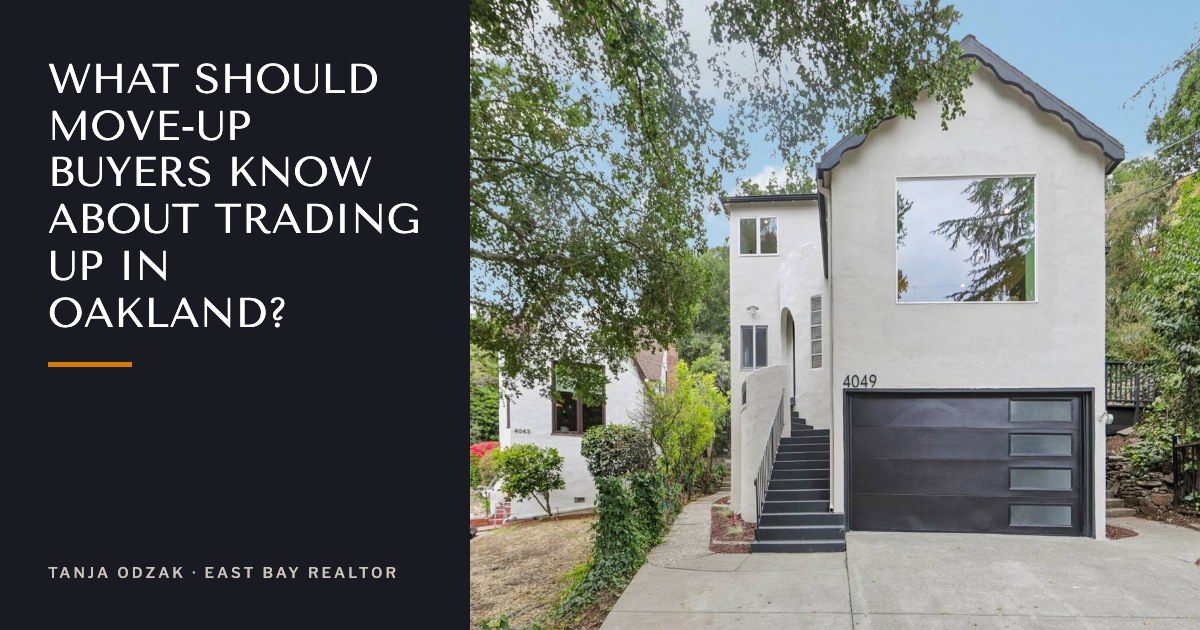
What should move-up buyers know about trading up in Oakland?
Trading up means running two transactions at once: selling the home you have and buying the next one. The biggest thing to know is that the order matters more than any single number. Whether you buy first or sell first changes your risk, your timeline, and how strong your offer looks to a seller. The goal is to line both sides up so you are never carrying two homes by accident.
Tanja Odzak is a Top East Bay Realtor with eXp Realty, helping buyers and sellers in Oakland and across the East Bay. I work both sides of a move-up at the same time: what your current home is worth, using real comps for your specific street, and what the next home realistically costs in the pocket of Oakland you are moving toward. That way you are not handed between agents who are not talking to each other.
This guide walks through the questions move-up buyers ask me most, in the order they come up. For the short version of how I handle it, see my page on trading up to a bigger home in Oakland.
Should you sell first or buy first?
There is no single right answer. It depends on your numbers, how much risk you can carry, and what is happening in the specific Oakland neighborhoods on both ends of your move. We decide it together, and I sequence the closings either way.
Here are your main options, with the trade-off for each:
- Sell first. You know your proceeds before you shop, so you shop with real numbers. The trade-off is that you may need somewhere to live between homes.
- Make an offer contingent on selling your home. This lets you buy before your current home has sold. The trade-off is that in a competitive market, sellers often prefer offers without that condition, which can make yours less attractive.
- Negotiate a rent-back. A rent-back lets you stay in your home for a short period after it closes. It gives you room to close on your next home and move without a rush.
- Sell first, rent or stay with someone for a while, and buy when the right home appears. This removes the double timeline completely.
I do not push one of these. I lay out the trade-off for your situation and help you pick the sequence that fits.
What will you actually net from selling your current home?
Know this number before you shop. Your down payment on the next home, and what you can comfortably afford, depends on it.
For every home I sell, I prepare a written net sheet: sale price minus costs, so you know a close approximation of your proceeds. In Oakland those costs include two transfer taxes, escrow and title fees, any prep, and your loan payoff. If you want the full list, read what it costs to sell a house in Oakland.
Two Oakland steps are worth knowing now, because they affect both the timing and the cost of your sale:
- The sewer lateral. The pipe from your house to the street needs a compliance certificate or a time extension certificate before escrow can close. The ordinance typically names the seller, but who brings it into compliance is negotiable.
- The sidewalk. The sale triggers a sidewalk compliance certificate, with some exemptions. I encourage you to get a sidewalk bid early so you know where you stand. Who handles any work is also negotiable.
Starting both early keeps your sale from stalling, and a stalled sale on one side can disrupt the purchase on the other. You can read the full seller side at selling your home in Oakland.
Should you fix up your current home before selling?
It depends on the home. Sometimes a few well-chosen repairs pay for themselves, and sometimes selling as-is is smarter. I tell you which one would actually move your sale price.
If your home is older, and many Oakland homes are 75 to 100-plus years old, a pre-listing inspection is a must. It tells us what a buyer's inspector will find before the buyer does, so we can fix it or price for it. Beyond repairs, the changes that help most are the ones that make a home feel lighter, brighter, and clean: open curtains and blinds, matching bulbs that all work, fresh neutral paint where a bold color would distract, and a professional window cleaning and exterior power washing. Nothing beats a clean home, in and out.
You may still be living in the home while it is on the market. If so, we plan showings around your schedule, keep the home show-ready, and use a proper showing window when needed. I handle scheduling and feedback so it is as painless as possible.
Where do Oakland move-up buyers usually go?
Many buyers trading up in Oakland move from the flats into Oakmore, Glenview, or further into the hills, where lot sizes and privacy increase. Each pocket has its own streets and its own pace, so I compare two or three side by side for you instead of guessing from a map.
For a sense of how wide the range is, 166 single-family homes sold in Oakland in September 2026. A quarter closed below $608,750 and a quarter closed above $1,423,500, a spread of $814,750 (source: Bridge MLS). That is a citywide picture, not a value for any one home. What matters is what sold on the street you are considering, and I pull that for you.
What should you check in a bigger Oakland home?
A bigger home often means an older home, a hillside lot, or both. Before you commit, I go through each of these with you:
- Foundation and drainage. Especially on a slope, where water and soil move.
- The electrical panel. Original panels and knob and tube wiring that still remains are common in older Oakland homes.
- The sewer lateral. Know its condition and who is responsible for it under the purchase agreement.
- The roof. Roofs laid over older roofs are not unusual here.
- Unpermitted work. Added rooms and converted spaces are common, and unpermitted space usually is not counted as legal square footage.
- Defensible space, if the home is in the hills. In the City's Very High Fire Hazard Severity Zone, ask whether the seller has proof of a passing defensible space inspection.
In the East Bay, sellers customarily order inspections before listing, so there are usually reports for you to read. I go through them with you and tell you what they mean for price. As a Top East Bay Realtor with eXp Realty, helping buyers and sellers in Oakland and across the East Bay, I specialize in older homes, so I can also give you an honest read on what you are taking on if the next home is a fixer versus move-in ready.
Why do Oakland homes often sell above the list price?
Oakland often runs on auction-style pricing. A home is listed under what it is expected to sell for, on purpose, so buyers see room to compete and the price gets bid up. On average, Oakland homes sell for around 20% over asking, but that is a citywide average and it means very little for any single home. The list price is a strategy, not a verdict.
For you as a buyer, that means building your offer from comparable sales on that specific street, not from the asking price. It also means your offer terms matter. If you need to sell first, that condition competes against offers without it, so we plan for that early.
What happens to your property taxes when you buy a bigger home?
In California, a purchased home is reassessed at its purchase price under Prop 13, so most move-up buyers see a higher tax bill on the next home. There are exceptions for some homeowners 55 and older. I help you estimate the new number before you buy, so it is part of your budget from the start. Property tax rules are a tax question, so confirm the details for your situation with a tax professional or the county assessor.
Can you keep your starter home as a rental?
It is possible, but Oakland's tenant protections and rent rules can apply depending on the property. Talk to a property attorney or the City's Rent Adjustment Program before you count on rental income. I will not promise a number here, because it depends on the home and the rules that apply to it.
What do move-up buyers get wrong?
Shopping before knowing their net. Run the sale numbers first so the budget is real.
Treating the asking price as the real price. Oakland's pricing is a strategy. Use comparable sales.
Leaning on a sale contingency without a plan. It can work, but know how it compares to the other options before you write the offer.
Skipping the older-home checks. A bigger home has more to check, not less.
Waiting on the sewer lateral and sidewalk. Start them early so they are negotiated, not discovered.
Forgetting the new tax bill. Estimate it before you fall in love with a house.
Where do you start?
Start with your numbers: what your current Oakland home is worth, what you can afford next, and whether buying or selling first makes more sense. From there we build a pricing and marketing plan for your current home, a search for the next one based on your real criteria, and a closing sequence timed so both transactions work together.
Tanja Odzak is a Top East Bay Realtor with eXp Realty, helping buyers and sellers in Oakland and across the East Bay. You can read my full method in how I help you buy and how I sell a home, see how I approach a home valuation in Oakland, read about buying a home in Oakland, or tell me your plan.
This article describes my general process and is not legal, tax, or financial advice.
Frequently Asked Questions
Should I sell my Oakland home first, or buy the next one first?
It depends on your numbers and how much risk you can carry, and we decide it together. I sequence the closings either way so you are not carrying two homes by accident.
What are my options for buying before my current home sells?
You can sell first, use a sale-contingent offer, or negotiate a rent-back so your timelines overlap. Each has trade-offs in risk and in how competitive your offer looks, and I help you pick the sequence that fits.
What is a rent-back, and how can it help me?
A rent-back lets you stay in your home for a short period after closing on its sale. It gives you room to close on your next home and move without a rush.
Will my property taxes go up when I buy a bigger home?
In California, a purchased home is reassessed at its purchase price under Prop 13, so most move-up buyers see a higher tax bill. There are exceptions for some homeowners 55 and older, and I help you estimate the new number before you buy.
Can I make an offer contingent on selling my Oakland home?
You can, but in a competitive market sellers often prefer offers without it, which can make yours less attractive. I help you weigh that against the other options.
What will I actually net from selling my current home?
I prepare a written net sheet that shows the sale price minus costs, so you know a close approximation of your proceeds before you shop.