2026-11-13 · 7 min read · Oakland
What Should You Know Before Buying a Home in the Oakland Hills?
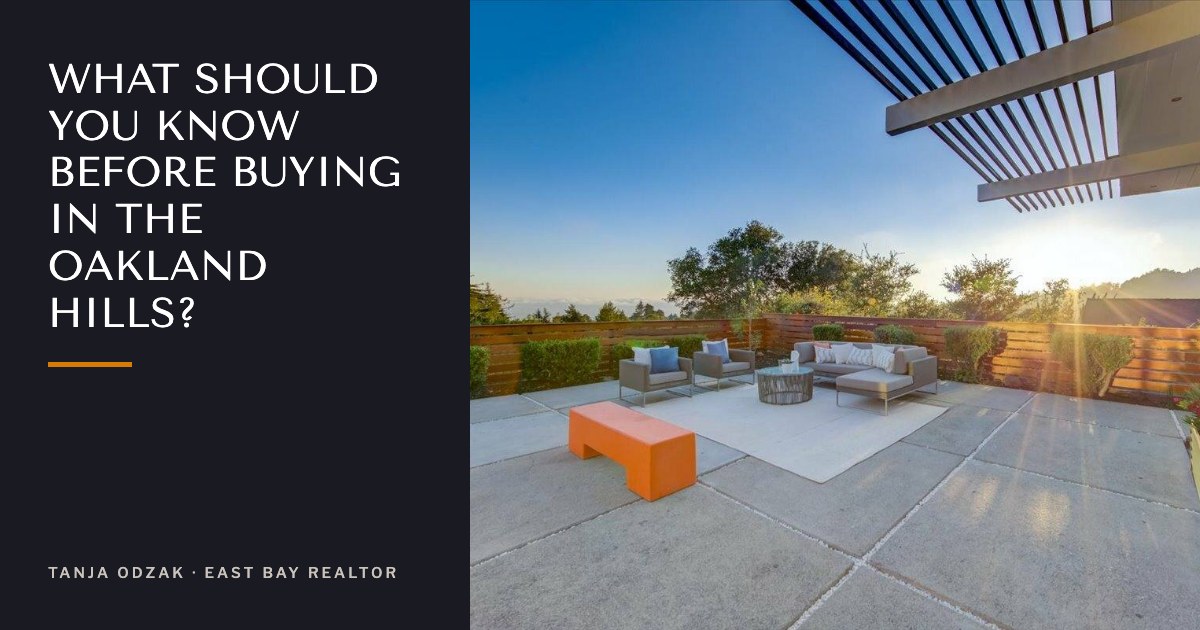
What should you know before buying a home in the Oakland hills?
Before you buy in the Oakland hills, know five things: whether the address is in the City's Very High Fire Hazard Severity Zone, what that means for defensible space at sale, how the Hayward Fault and the natural hazard disclosure affect the home, what insurance will look like, and how the slope shapes the house itself. None of these should scare you off. All of them are easier to answer before you write an offer than after.
Tanja Odzak is a Top East Bay Realtor with eXp Realty, helping buyers and sellers in Oakland and across the East Bay. Hillside homes here can have stunning views of the Bay and the bridges, and many are custom homes built into the tree canopy. This guide walks through what to check, in the order I'd check it with you.
Is the home in the Oakland hills fire zone?
Probably, but check the address. In 2025, the state's new fire map shrank Oakland's Very High zone. The City then adopted an ordinance in June 2025 that kept its larger zone in place as Oakland's Very High Fire Hazard Severity Zone. So much of the Oakland hills is still Very High for disclosures and defensible space rules. Neighborhoods like Montclair sit inside it. Homes in the flats are generally outside the zone.
This is routine information, not a warning sign. It shows up in your hazard disclosures, and it helps you plan for insurance and upkeep.
What does defensible space mean when you buy?
Defensible space is how plants and brush are kept around the house. When a home in the Very High zone sells, state law has the seller provide documentation of a defensible space inspection. If the work isn't done by closing, the buyer and seller can agree in writing that it will be finished within a year of closing.
So before you write, we check whether the seller already has proof of a passing inspection. Many well-prepared sellers have it ready before the home goes on the market. If they don't, we know to plan for it in the offer.
What about earthquakes and the Hayward Fault?
The Hayward Fault runs along the base of the Oakland hills. It's the reason Rockridge has its name: rock outcroppings at the northern end of a ridge formed by the fault.
Every purchase comes with a natural hazard disclosure, which shows the zones that apply to the address. What matters more for you is the house itself. Look at the foundation, any seismic retrofit work, and what the seller's reports say. On an older hillside home, I want to know what seismic work has been done before you fall for the view.
Will insurance be a problem in the Oakland hills?
It may or may not be. Not every area automatically falls to the California FAIR Plan. Talk to a local insurance agent who specializes in fire hazard before you write an offer, and keep working on quotes while you're still in your contingency period. That way you know the cost and availability before you commit.
I recommend this step on every home in the zone. It's the one I most want my buyers to start early.
How does the slope shape the house?
On a hillside lot, the ground matters as much as the kitchen. As a Top East Bay Realtor with eXp Realty, helping buyers and sellers in Oakland and across the East Bay, I look past the finishes on every hill tour to these four things:
- Drainage and foundation. Like many homes in Oakland, drainage and foundation issues may be present because of the hills.
- Retaining walls. What's holding the lot up, and what condition it's in.
- Stairs and access. How you get from the car to the front door, and what carrying groceries up that path would feel like on an ordinary day.
- Parking. Many older Oakland homes have a one-car garage, a shared driveway, or only street parking. I check the real parking situation on every home.
Weigh the stairs and the slope against what you want in a home. A home you love can still be the wrong fit if the path to the door doesn't work for your daily life.
Why are some hill homes newer than others?
In October 1991, the Oakland hills firestorm destroyed nearly 4,000 homes. That's why some hill neighborhoods mix older houses with homes rebuilt in the 1990s.
Hiller Highlands, for example, was destroyed entirely and rebuilt afterward, so many of Oakland's old-home issues don't apply there. Buyers in a rebuilt neighborhood focus less on old-home repairs and more on the homeowners association's documents, the roof and siding, and the fire paperwork. In older hill neighborhoods like Oakmore, with Mediterranean, Tudor, and Craftsman homes mostly from the 1920s and 1930s, the checklist looks more like any century-old Oakland home: the electrical panel, knob and tube wiring that still remains, the roof, and how past additions were done.
What city steps come with an Oakland sale?
These apply in the hills the same as anywhere in Oakland:
- The transfer tax. Alameda County charges $1.10 per $1,000, and the City of Oakland charges its own in tiers on the whole price: 1% up to $300,000, 1.5% from $300,001 to $2 million, 1.75% from $2 million to $5 million, and 2.5% above that. The county tax is customarily paid by the seller, and the city tax is customarily split 50/50 between the seller and the buyer. Both are negotiable, but on a standard sale that split almost always holds.
- The sewer lateral. Oakland is part of the East Bay regional program, and the sale needs a compliance certificate or a time extension certificate before escrow closes. Who brings the lateral into compliance is negotiated.
- The sidewalk. The sale triggers a sidewalk compliance certificate, with some exemptions. Who brings it into compliance is negotiated too.
This article describes my general process and is not legal, tax, or financial advice.
What's the step-by-step for buying in the hills?
- Get pre-approved and agree on representation before touring. So you're ready to act the day the right home shows up.
- Check the address on the fire map. And ask whether the seller has a defensible space inspection.
- Start insurance quotes early. With a local agent who specializes in fire hazard.
- Tour with the hill in mind. Stairs, slope, drainage, retaining walls, parking, and the trees close to the house.
- Read the seller's reports and disclosures. Including the natural hazard disclosure and any seismic work.
- Check the sewer lateral and sidewalk status. So they're negotiated, not discovered late.
- Write on real comps. Hillside homes here are often custom and one of a kind, so pricing takes careful comparable sales.
The full method is on how I help you buy.
What are the most common mistakes hill buyers make?
Falling for the view before checking the lot. Drainage, retaining walls, and the foundation decide whether the view is a good buy.
Leaving insurance until the end. Quotes take time, and you want them while you can still walk away.
Assuming a rebuilt home has no issues. It has different ones: HOA documents, roof and siding, and fire paperwork.
Ignoring the daily climb. Count the steps from the street.
Skipping the seismic questions. Ask what retrofit work the home has had.
What does this look like with a real buyer?
Here's a common situation. A buyer finds a mid-century custom home in Montclair with a Bay view. Before writing, we confirm it's inside the Very High zone, ask the seller for the defensible space inspection, and the buyer calls a local insurance agent who specializes in fire hazard that same day. On the tour, I point out a retaining wall worth a closer look, and the inspection confirms it. The buyer writes knowing the insurance cost and the wall repair, instead of learning both in escrow.
A real client of mine, buying as part of a 1031 exchange, put it this way: "Tanja was efficient, uncovered important details about the home that I had not identified, and got us to a good solid offer." On a hillside home, those details are the whole job.
Where do you start?
If you're looking at a home in the Oakland hills, start with the address. Tanja Odzak is a Top East Bay Realtor with eXp Realty, helping buyers and sellers in Oakland and across the East Bay, and I'll tell you what to check before you write an offer.
You can read more about buying a home in Oakland, explore the city's neighborhoods on the Oakland page, see what a hillside neighborhood like Montclair or Oakmore is like, check what an older home involves for first-time buyers in Oakland, or send me the address.
Frequently Asked Questions
Is the Oakland hills in a Very High fire zone?
Much of it is. In 2025, the City kept its larger zone in place as Oakland's Very High Fire Hazard Severity Zone, even after the state's new map shrank it. Check the specific address.
What is defensible space paperwork when I buy in the Oakland hills?
When a home in the Very High zone sells, state law has the seller provide documentation of a defensible space inspection. If the work isn't done by closing, the buyer and seller can agree in writing to finish it within a year.
Can I get homeowners insurance in the Oakland hills?
It may or may not be an issue, because not every area automatically falls to the California FAIR Plan. Talk to a local insurance agent who specializes in fire hazard before you write an offer.
Where is the Hayward Fault in Oakland?
It runs along the base of the Oakland hills. Every purchase includes a natural hazard disclosure, and it's worth asking what seismic work the home has had.
Why do some Oakland hills homes date from the 1990s?
The October 1991 firestorm destroyed nearly 4,000 homes, so some hill neighborhoods mix older houses with homes rebuilt afterward.
Who pays the transfer tax when I buy in Oakland?
By custom, the seller pays Alameda County's transfer tax, and Oakland's city transfer tax is split 50/50 between the seller and the buyer. Both are negotiable, but that split almost always holds on a standard sale.