2026-11-13 · 8 min read · Oakland
How Do You Downsize in Oakland Without Leaving the Neighborhood You Know?
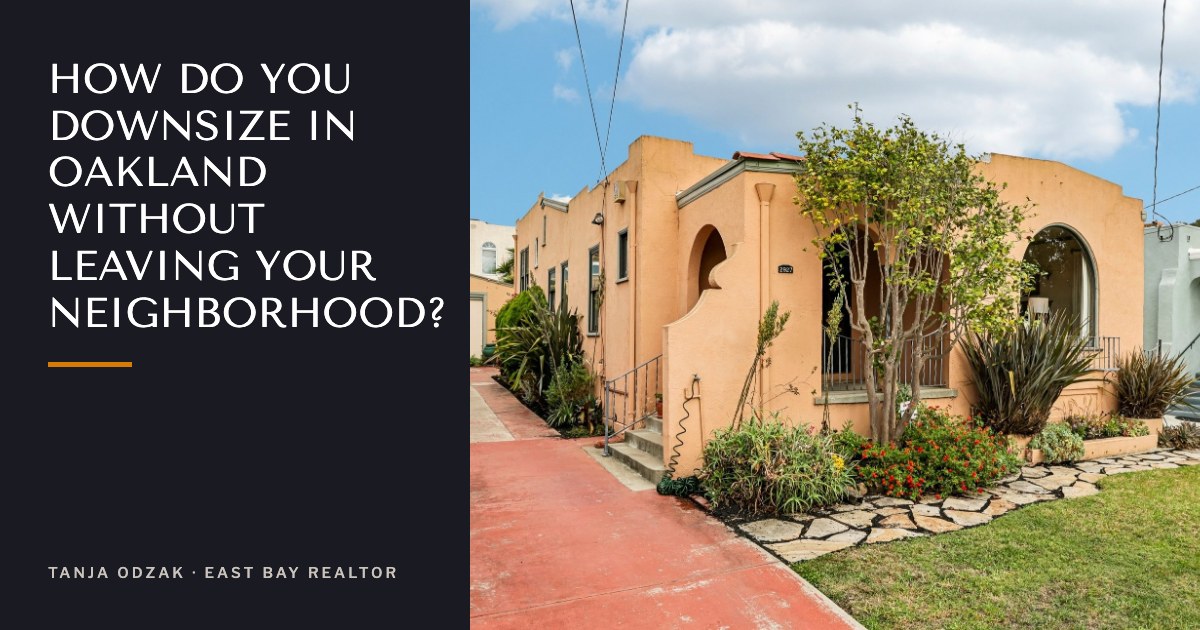
How do you downsize in Oakland without leaving the neighborhood you know?
You plan the move around your life, not the other way around. That means deciding what "less house" actually means for you, getting a real number for your home, lining up the Oakland sale steps early, and then searching for a smaller place in the pockets of Oakland you already know. There is no deadline except the one you set.
Tanja Odzak is a Top East Bay Realtor with eXp Realty, helping buyers and sellers in Oakland and across the East Bay. Downsizing in Oakland often means selling a home that has been yours for decades, in neighborhoods like Oakmore and Glenview where houses have appreciated well past what most owners paid. It is rarely just a transaction. It is a next chapter, and I bring the same patience I use with first-time buyers to sellers doing something for the first time in the other direction.
This guide walks through the questions I hear most, in the order they usually come up. For the quick version, see my page on downsizing in Oakland.
When is the right time to downsize?
There is no single right time, and it is your decision. Common triggers are stairs, upkeep, or wanting to free up equity. I am glad to talk through your timeline with no pressure to list. We list when you are ready, not on a deadline I set.
If you do not know where you want to move yet, that is completely normal. Many people start by finding out what their home is worth and what their equity could buy, then decide.
What does "staying in the neighborhood" really involve?
It starts with knowing what you like about where you live, and then finding a smaller home that keeps it. For some people that is the quiet, hilly streets of Oakmore, next to Dimond Canyon Park. For others it is Glenview, along Park Boulevard, known for its strong community feel and a Halloween night the whole neighborhood turns out for. Both are places where owners who have lived there for decades often decide it is time for the next phase of life.
You have several paths:
- A smaller home or condo in Oakland. For comparison, Oakland condos and townhomes sold at a median of $501,000 in September 2026 (41 sold), against $925,000 for single-family homes (source: Bridge MLS). Those are citywide medians, not what a specific home will cost, and I pull the real comparisons for the pockets you care about.
- A smaller home elsewhere in the East Bay. Some people move a few cities over, and I help you compare what your equity would buy in each.
- A move out of the Bay Area. Some people leave entirely, and the same planning applies.
I help you compare these with real numbers, and I do not steer you toward any of them.
How do you sequence the sale and the next place?
You have three workable ways, and each trades speed for comfort:
- Sell first, buy later. Many people sell first, rent or stay with someone for a while, and buy when they find the right place. That removes double timelines.
- Buy and sell together. If you are buying a smaller place at the same time, I coordinate both sides so you are not carrying two mortgages by accident.
- Ask for a rent-back. A rent-back lets you stay in your home for a short period after closing, so you can close on your next place and move without rushing.
The right one depends on your numbers and how much calm you want in the middle. I lay out the pros and cons and you choose.
What do you do with decades of belongings?
Sort in stages. It helps to start with the rooms you use least, hire an estate sale or cleanout company for what you do not keep, and donate or sell the rest. I recommend trusted vendors and help you set a timeline that fits your pace.
In my market, sellers usually move out completely before listing, though it does happen that people stay. I plan for an empty home first. Sometimes sellers are still on site, working through the house themselves. Other times they are away and only approve contracts and pay invoices. Either way, I coordinate the cleaning, the repairs, and getting the home ready for staging, photos, and video, so you never have to book any of it yourself.
Do you have to fix everything before you sell?
No. A house that has been loved for decades and needs work is normal for Oakland, and I will tell you which repairs would move the number in your specific neighborhood and which are not worth your time.
As a Top East Bay Realtor with eXp Realty, helping buyers and sellers in Oakland and across the East Bay, I specialize in homes that are 75 to 100-plus years old, which describes a lot of Oakmore and Glenview's housing, so I can usually tell you what a buyer's inspector will find before they find it. For an older home, a pre-listing inspection is a must. It lets us fix a problem or price for it before a buyer uses it to negotiate.
Beyond repairs, I focus on changes that lighten, brighten, and clean: open curtains and blinds, matching bulbs that all work, fresh neutral paint where a bold color would pull attention, professional window cleaning, and a power wash of the exterior. Nothing beats a clean home, in and out. It is not about erasing your life in the house. It is about letting buyers see the home and getting it sold.
What does Oakland require when you sell?
Two city-specific steps, and the sale also carries transfer taxes.
The sewer lateral. The sewer line from the house to the street needs a compliance certificate or a time extension certificate under the East Bay regional program before escrow can close. The ordinance typically names the seller, but who brings the line into compliance is negotiated. Many sellers ask the buyer to take it on, and it depends on the home, the market, the competition, and the price.
The sidewalk. The sale triggers a sidewalk compliance certificate, with some exemptions. I encourage you to get a sidewalk bid early, so you know whether it already complies. Getting the certificate before you sell may or may not be recommended, depending on the home. If it is not brought into compliance, you can ask the buyer to assume it, with no guarantee. Same negotiation, same factors.
Transfer taxes. Alameda County's is $1.10 per $1,000 of the price. The City of Oakland's is charged in tiers on the whole price: 1% up to $300,000, 1.5% from $300,001 to $2 million, 1.75% from $2 million to $5 million, and 2.5% above that. The county tax is customarily paid by the seller, and the city tax is customarily split 50/50 between seller and buyer.
I line all of this up early so nothing slows the sale. If you want the full cost picture, read what it costs to sell a house in Oakland, and for the two Oakland steps read about the sewer lateral and the sidewalk.
What about taxes when you downsize?
I am not your tax professional, so here is the general picture. Please confirm each point with one.
- Your property tax base. Prop 19 lets homeowners 55 and older, and some others, transfer their tax base to a replacement home in California, up to three times, if they buy within two years and meet the rules. If the new home is worth more, the base is adjusted. Check with the county assessor.
- Profit on the sale. Federal law lets many homeowners exclude up to $250,000 of gain, or $500,000 for couples, if they owned and lived in the home for two of the past five years. Your situation may differ.
What does it look like with a real seller?
One Oakmore seller I worked with had loved her house and did not really want to sell it, but life was pulling her toward her next phase. I helped her sell it on her own terms. A Glenview client said, "we barely had to lift a finger. Her ability to foresee and resolve potential issues before they arose was truly remarkable."
Downsizing with me starts with a conversation about what "less house" means to you, not a pitch to list right away.
How will your home be found by buyers?
Once the home is ready, the marketing starts. A website is no longer just a website. For every listing I build one connected presence, with targeted Facebook and Instagram ads, my website, YouTube, and AI all tied together so your home can actually be found.
What mistakes do downsizers make?
Starting with the listing instead of the plan. Decide what you want next, then set the timeline.
Fixing everything. Repair what moves the number in your neighborhood and skip the rest.
Waiting on the sewer lateral and sidewalk. Start them early so they are negotiated, not discovered.
Doing the cleanout in one weekend. Sort in stages, and let a cleanout company help.
Skipping the tax conversation. Talk to a tax professional and the county assessor before you buy the next place.
Forgetting a rent-back. It can turn a rushed move into a calm one.
Where do you start?
Start with a conversation about what "less house" means to you. Then I pull real comps for your specific Oakland street, give you an honest read on what is worth fixing given your home's age, line up the sewer lateral and sidewalk steps, and build a schedule with prep, marketing, and closing that you never have to rush.
Tanja Odzak is a Top East Bay Realtor with eXp Realty, helping buyers and sellers in Oakland and across the East Bay. You can read more about downsizing, see how I run a home valuation in Oakland, read about selling your home in Oakland, see how I sell a home, or tell me about your next chapter.
This article describes my general process and is not legal, tax, or financial advice.
Frequently Asked Questions
I've lived in my Oakland home for decades and it needs work. Do I have to fix it all first?
No. I will tell you which repairs would actually move the number in your specific Oakland neighborhood and which ones are not worth your time.
What if I don't know where I want to move yet?
That is completely normal, and there is no pressure on timeline. We list when you are ready, not on a deadline I set.
Can I keep my property tax base when I downsize in California?
Prop 19 lets homeowners 55 and older, and some others, transfer their tax base to a replacement home in California, up to three times, if they buy within two years and meet the rules. If the new home is worth more, the base is adjusted, so check with the county assessor.
How much of my profit will be taxed when I sell?
Federal law lets many homeowners exclude up to $250,000 of gain, or $500,000 for couples, if they owned and lived in the home for two of the past five years. Your situation may differ, so talk with a tax professional.
Can I stay in the house for a while after it sells?
Yes. A rent-back agreement can let you stay for a short period after closing, so you can close on your next place and move without rushing.
Can I sell first and buy later?
Yes. Many people sell first, rent or stay with someone for a while, and buy when they find the right place, which removes double timelines. I walk you through the pros and cons.